
Deep Dive
Deep Dive
By FreshPlay Studios · Survival Category · Rating: 4.9 ★
Game Overview
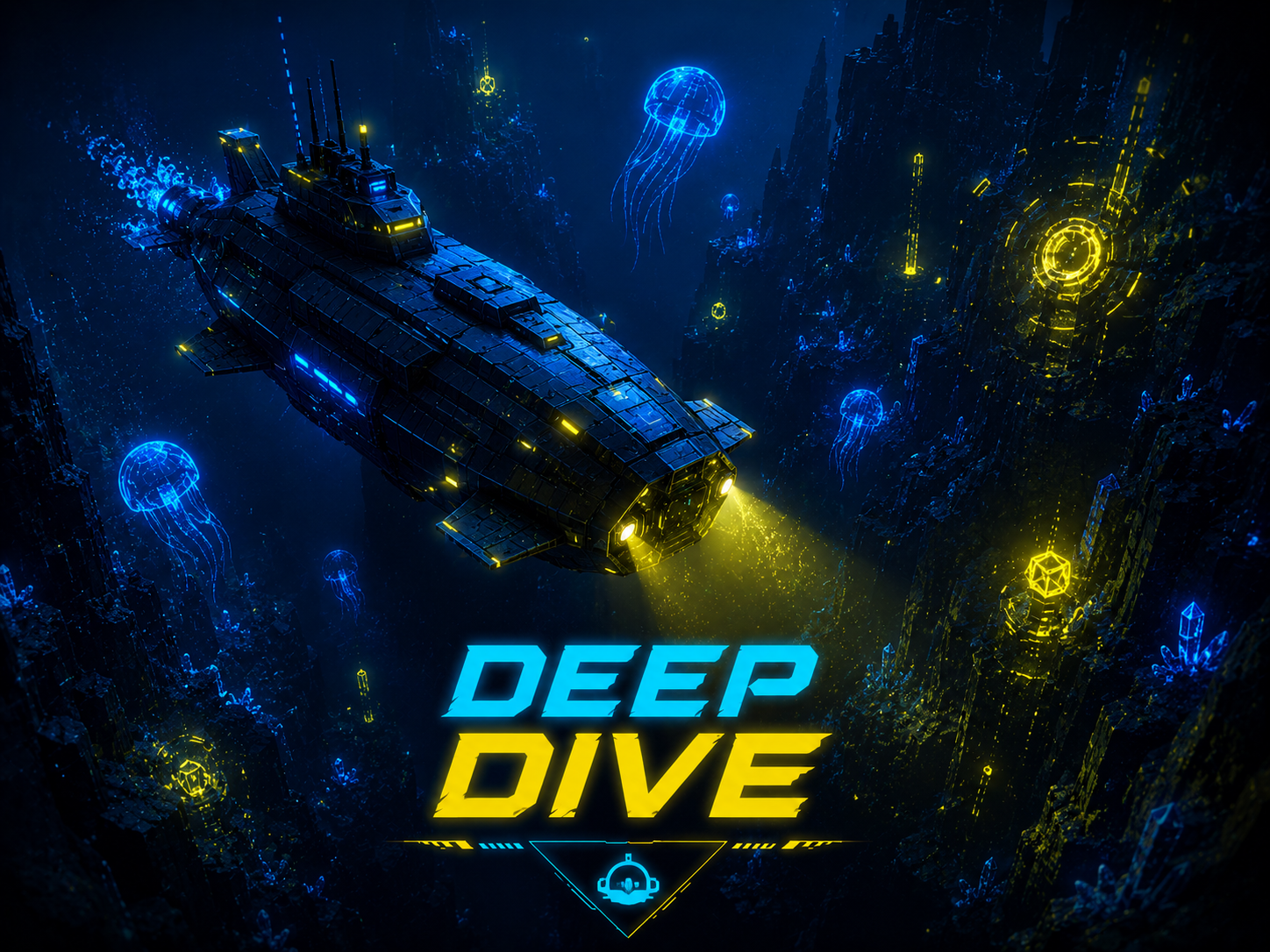
Deep Dive is an atmospheric survival game that takes you on a harrowing descent into the ocean's darkest depths aboard a fragile submarine. You must manage dwindling oxygen, avoid increasingly aggressive deep-sea creatures, and navigate through tight underwater cave systems — all while the crushing pressure at greater depths gradually weakens your hull. Every meter deeper is a calculated risk, and knowing when to surface is just as important as knowing how to survive.
The game's core tension comes from its dual resource system: oxygen and hull integrity. Oxygen depletes constantly and can be replenished by surfacing at air pockets hidden in cave ceilings or by finding scattered oxygen canisters. Hull integrity decreases with depth pressure and creature attacks, and can only be partially repaired at rare repair stations. This creates a persistent "push your luck" dynamic — do you dive deeper for more points and rarer discoveries, or surface early to preserve your submarine?
Deep Dive features five depth zones, each with distinct biomes and threats. The Sunlight Zone (0-200m) is relatively safe with small fish and gentle currents. The Twilight Zone (200-500m) introduces bioluminescent jellyfish swarms and stronger currents. The Midnight Zone (500-1500m) brings aggressive anglerfish, crushing pressure, and near-total darkness where only your sonar can reveal the path ahead. The Abyssal Zone (1500-3000m) contains colossal predators and labyrinthine cave systems. Reaching the Hadal Zone (3000m+) is a feat achieved by only the most skilled and risk-tolerant players, where every remaining resource matters and a single mistake means implosion.
Your sonar ability serves dual purposes: it reveals the surrounding terrain and creature positions with a brief pulse, but it also attracts nearby predators to the sound source. This creates a strategic dilemma — using sonar in dark zones is essential for navigation but dangerous for survival. The game rewards players who learn to read environmental cues (bioluminescence patterns, current changes, distant creature sounds) to navigate with minimal sonar usage.
Controls & How to Play
-
ARROWSDRAGNavigate
-
SPACETAPBoost / Sonar
Game Mechanics
Gameplay Strategy & Pro Tips
Oxygen Management Basics
Oxygen depletes at a constant rate that increases slightly with depth. The critical threshold is 30% — below this, your vision narrows and controls become sluggish, simulating oxygen deprivation. Always keep a mental map of the nearest air pocket or canister. If you reach 25% oxygen without a known supply nearby, immediately ascend — the risk of disorientation at low oxygen almost always leads to catastrophic outcomes.
Creature Avoidance Patterns
Each creature type has predictable behavior. Jellyfish drift in fixed patterns and are harmless to avoid once you learn their routes. Anglerfish are attracted to light — avoid using sonar when their distinctive glow is visible. Abyssal predators patrol set territories; learn their patrol boundaries and slip through during their furthest patrol point. Fighting creatures is never efficient — evasion always costs less hull integrity than combat.
Sonar Discipline
Use sonar in short, targeted bursts rather than continuous pinging. Each ping reveals the terrain for 3 seconds — memorize the layout during this window. In the Midnight Zone and below, develop a rhythm of "ping, memorize, navigate blind for 10 seconds, ping again." This minimizes predator attraction while maintaining adequate navigation awareness.
When to Surface
The optimal surfacing decision depends on your hull integrity, not just oxygen. Oxygen is recoverable at air pockets; hull integrity is only repairable at rare stations. If your hull drops below 40%, begin ascending immediately regardless of oxygen levels. A hull implosion is instant death, while low oxygen gives you a gradual warning through visual and control effects.