Idle Games Explained: Why They're So Addictive
Idle games, also known as incremental or clicker games, are one of gaming's most fascinating paradoxes. On the surface, they seem like the simplest possible games — click a button, watch a number go up. Yet they've become one of the most popular and engaging genres across all platforms. Games like Cookie Clicker have attracted millions of players, and the genre continues to evolve with titles like Clicker Miner on FreshPlay Arcade. Let's explore why these seemingly simple games are so compelling.
The Psychology of Number Growth
At the heart of every idle game is a fundamental psychological hook: the satisfaction of watching numbers grow. This taps into our brain's reward system in a very direct way. When we see numbers increasing — whether it's coins, resources, or power levels — our brain releases small doses of dopamine, the neurotransmitter associated with pleasure and reward. Unlike more complex games where rewards are sporadic and uncertain, idle games provide a constant, reliable stream of positive feedback. Every click produces visible progress, and every upgrade makes future progress faster. This creates a predictable yet satisfying cycle that our brains find deeply engaging.
The Upgrade Loop
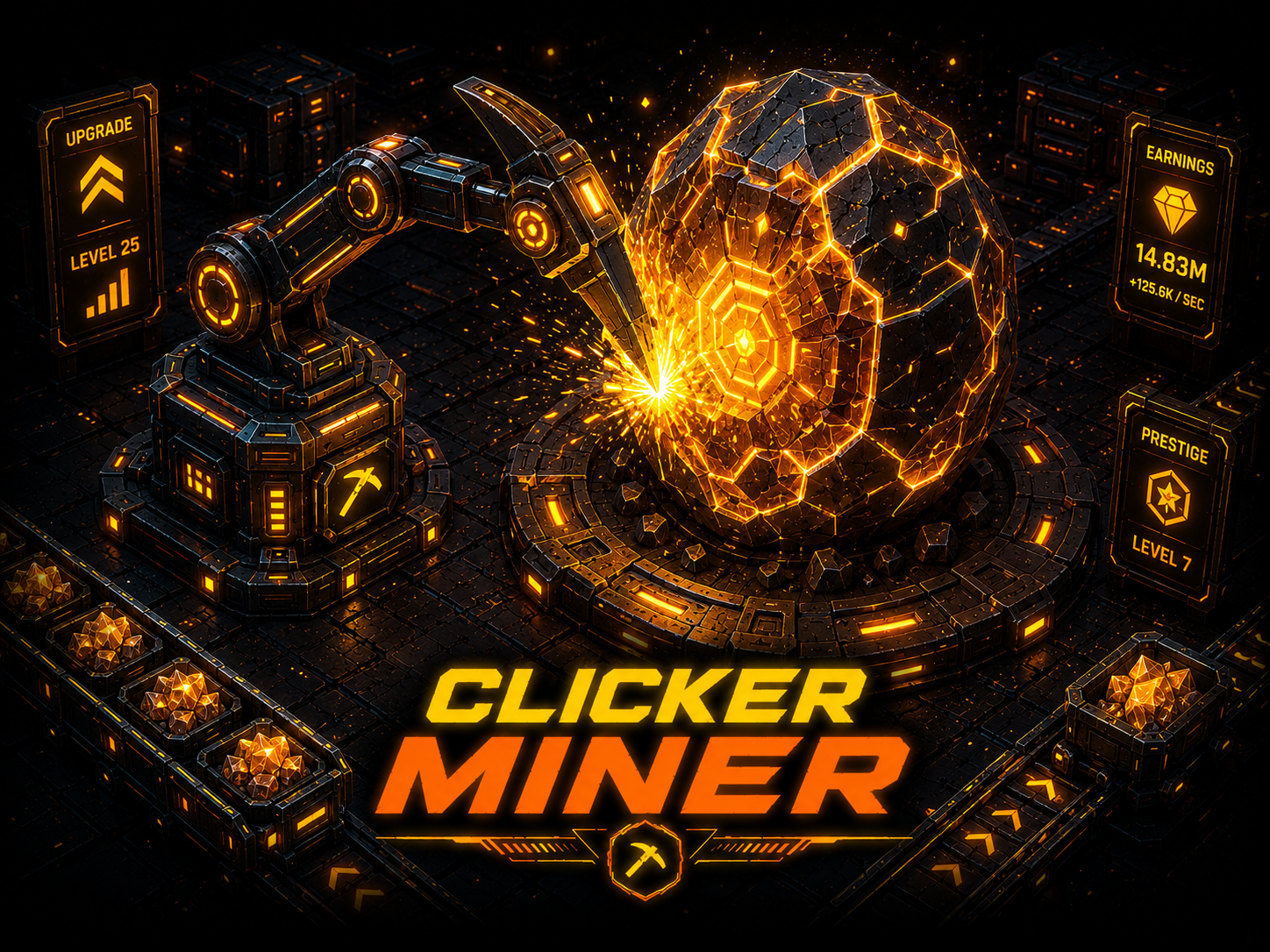
The core mechanic that separates idle games from simple clicking applications is the upgrade system. In Clicker Miner, for example, you start by clicking to mine basic resources. But as you accumulate resources, you can purchase upgrades: automated miners that generate resources without clicking, deeper mine levels that yield more valuable minerals, processing equipment that multiplies your output. Each upgrade creates a noticeable acceleration in your progress, which triggers another dopamine release and motivates you to work toward the next upgrade. This loop of earn, upgrade, accelerate is the engine that drives idle game engagement.
The Prestige Mechanic
One of the most brilliant innovations in idle game design is the prestige system. Once you've reached a certain point in the game, you're offered the option to reset all your progress in exchange for a permanent multiplier that makes your next run faster. This might sound counterintuitive — why would anyone willingly lose their progress? But the prestige mechanic serves several important purposes. It provides a long-term goal beyond simply accumulating more resources, it gives experienced players a fresh challenge with new strategic decisions, and it creates an additional layer of optimization as players try to determine the ideal moment to prestige for maximum efficiency.
Clicker Miner: A Case Study
Clicker Miner on FreshPlay Arcade exemplifies modern idle game design. The game starts with simple clicking to mine surface-level minerals. As you accumulate resources, you unlock progressively deeper layers of the mine, each containing more valuable and exotic minerals. The upgrade tree branches into multiple paths: you can invest in mining speed, mining power, automated systems, or mineral processing. Each path offers distinct advantages, and finding the optimal balance is a genuine strategic challenge. The game also features prestige mechanics through the 'Core Reset' system, where reaching the planet's core allows you to start fresh with permanent bonuses that make subsequent runs significantly more productive.
Why Idle Games Work in a Browser
Browser-based idle games have a unique advantage over their mobile and desktop counterparts: they can run in a background tab. While you work, study, or browse other websites, your idle game continues to accumulate resources. This 'set it and forget it' aspect removes the guilt that sometimes comes with gaming — you're not sitting idle watching a screen, you're multitasking. When you switch back to the game tab, you're greeted with a satisfying pile of accumulated resources that you can invest in upgrades, continuing the cycle.
The Social Dimension
Modern idle games have also developed a strong community aspect. Players share optimal strategies, debate the best upgrade paths, and compete for the fastest prestige times. This social layer adds depth to what might otherwise feel like a solitary experience. The math behind idle games can be surprisingly complex, and community-driven optimization guides often read like academic papers, with spreadsheets, formulas, and statistical analyses. This unexpected depth is part of what makes idle games so enduring — beneath the simple surface lies a genuine strategic challenge.