Survival Games Guide: Strategies for Deep Dive and Space Scavenger
Survival games test something that most other game genres don't: your ability to manage limited resources under pressure while making decisions with incomplete information. On FreshPlay Arcade, our survival games — Deep Dive and Space Scavenger — challenge you to balance exploration with conservation, risk with reward, and short-term needs with long-term planning. This guide covers the essential strategies that will help you survive longer and score higher in both games.
Deep Dive: Understanding Oxygen Management
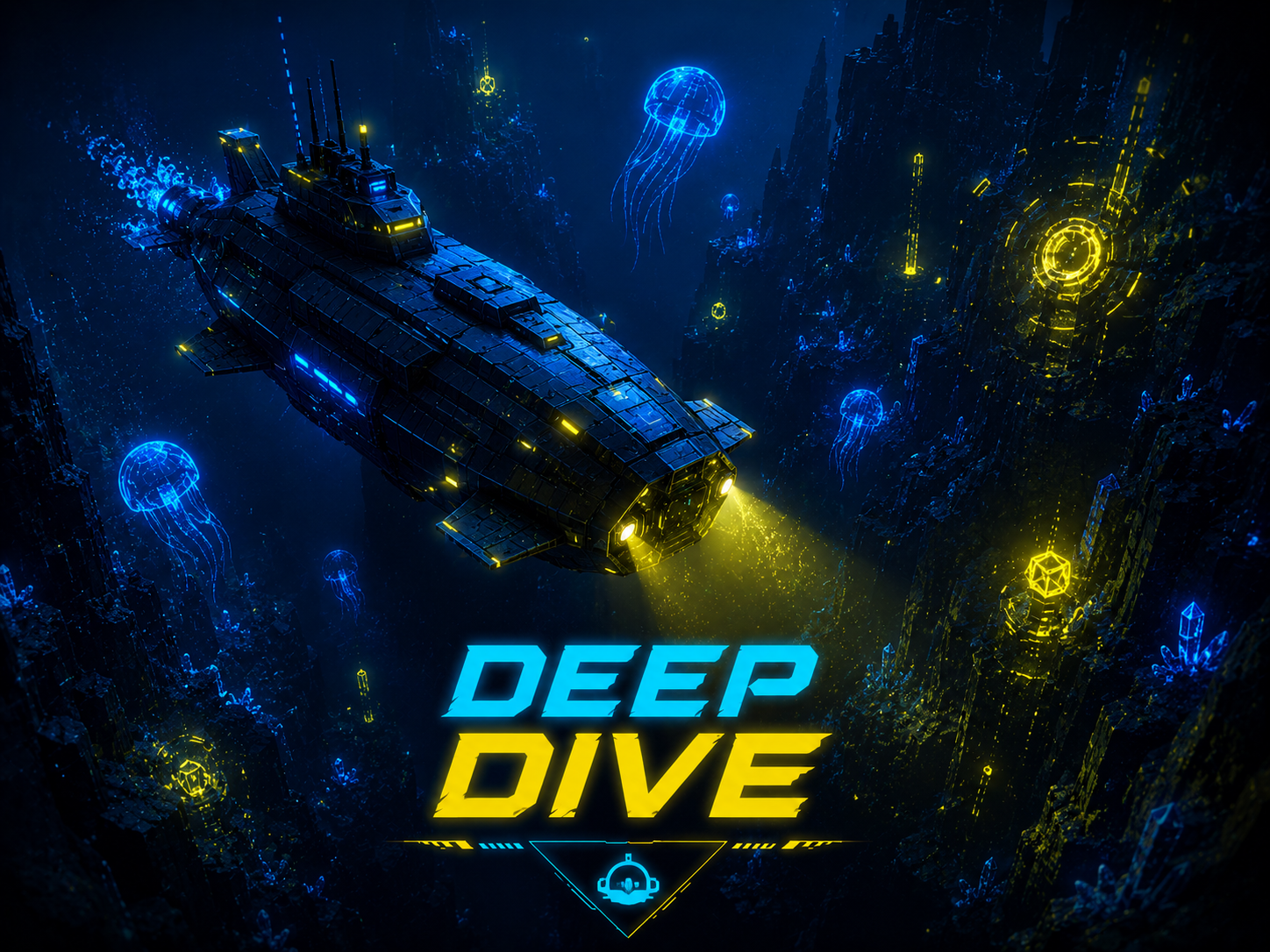
Deep Dive sends you into procedurally generated ocean depths where your primary resource is oxygen. Understanding the oxygen system is crucial to long runs. Your oxygen depletes at a constant base rate, but several factors affect this: depth increases depletion speed, swimming (as opposed to drifting) uses more oxygen, and taking damage from sea creatures causes oxygen loss. Conversely, collecting air bubbles restores oxygen, and certain power-ups can reduce your depletion rate temporarily. The key strategic insight is that you need to plan your descent around oxygen bubble locations. Before diving deeper, survey the area below you and identify oxygen pickup locations. Never dive past an oxygen bubble — always collect it, even if it means a slight detour.
Deep Dive: The Risk-Reward of Deeper Layers
Each depth layer in Deep Dive contains more valuable resources but also more dangerous creatures. The temptation to rush deeper for bigger scores is the most common cause of death for intermediate players. The optimal strategy is what speedrunners call 'layer farming' — spend enough time at each depth to accumulate a comfortable oxygen buffer before descending to the next layer. A good rule of thumb is to not descend to the next layer until you have at least 60 percent of your maximum oxygen remaining. This buffer ensures you have enough reserves to handle unexpected threats in the new, more dangerous environment.
Deep Dive: Creature Patterns
Every creature in Deep Dive follows predictable movement patterns once you learn to recognize them. Jellyfish drift in sinusoidal waves — swim above or below them when they're at the extremes of their wave. Anglerfish charge in straight lines toward your position when triggered, but they have a long cooldown between charges — trigger them from a distance, dodge the charge, then swim past while they recover. Electric eels patrol fixed paths and can be avoided entirely by learning their routes. Understanding these patterns transforms Deep Dive from a reactive game of dodging into a strategic game of positioning.
Space Scavenger: Fuel Economy
Space Scavenger challenges you to survive in the vastness of space by collecting resources from abandoned stations and debris fields. Your primary constraint is fuel, which limits your ability to navigate between resource locations. Unlike Deep Dive's oxygen system, fuel in Space Scavenger is spent on thrust — you don't lose fuel by drifting. This means efficient navigation is about minimizing thrust usage. Use gravitational slingshots around planets when possible, drift through safe areas rather than burning fuel, and always plan your route to chain multiple resource pickups before needing to refuel.
Space Scavenger: Inventory Management
Your ship in Space Scavenger has limited cargo capacity, which creates interesting strategic decisions. You can't collect everything you find, so you need to prioritize. Fuel cells should always be collected when encountered, regardless of your current fuel level — being caught without fuel is an instant game over. Repair kits should be prioritized when your hull is below 50 percent. Valuable cargo items (which contribute to your score) should only be collected when you have spare capacity. The mistake most players make is hoarding valuable cargo at the expense of survival resources, leading to a high-scoring ship that can't survive the next encounter.
General Survival Tips
Several strategies apply to all survival games on FreshPlay Arcade. First, patience beats aggression. In survival games, the player who takes calculated risks will always outperform the player who rushes blindly. Second, learn from every death. Each game over screen should be a learning opportunity — what resource ran out, what threat did you underestimate, what decision point led to your downfall? Third, set incremental goals. Rather than trying to beat your all-time high score every run, set small, achievable goals like 'reach depth layer 5' or 'collect 10 fuel cells in one run.' These incremental goals keep motivation high and produce consistent improvement over time.